Round and round, since the knights.
A game for knights became a toy for kings, then a steam-powered fairground ride. Here is where carousels came from, how the horses learned to gallop, and the old machines that still turn.
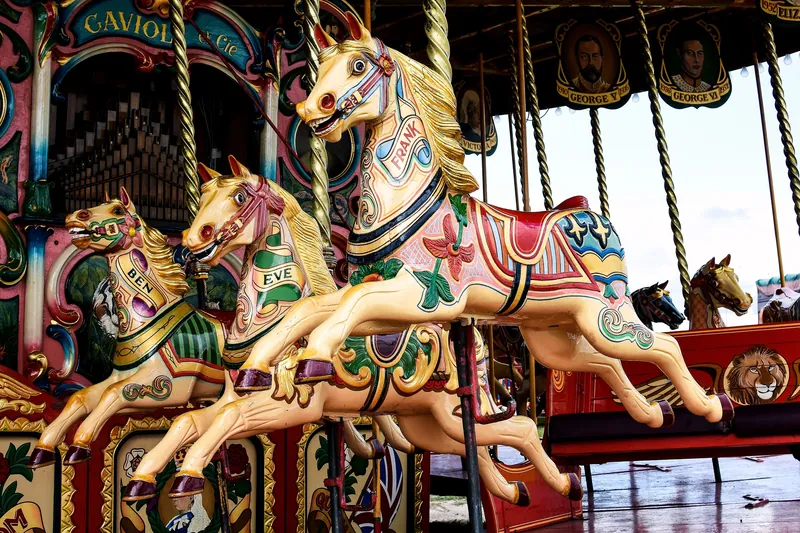
The short version
The word carousel comes from the Spanish and Italian for “little war”, a training game for horsemen. Smithsonian Magazine To practise, riders sat on legless wooden horses that turned around a central pole, trying to spear a hanging ring. Smithsonian Magazine
Early carousels were turned by people or animals. Smithsonian Magazine Then, on New Year’s Day 1861, Thomas Bradshaw ran the first known steam roundabout, at Bolton. Grace’s Guide
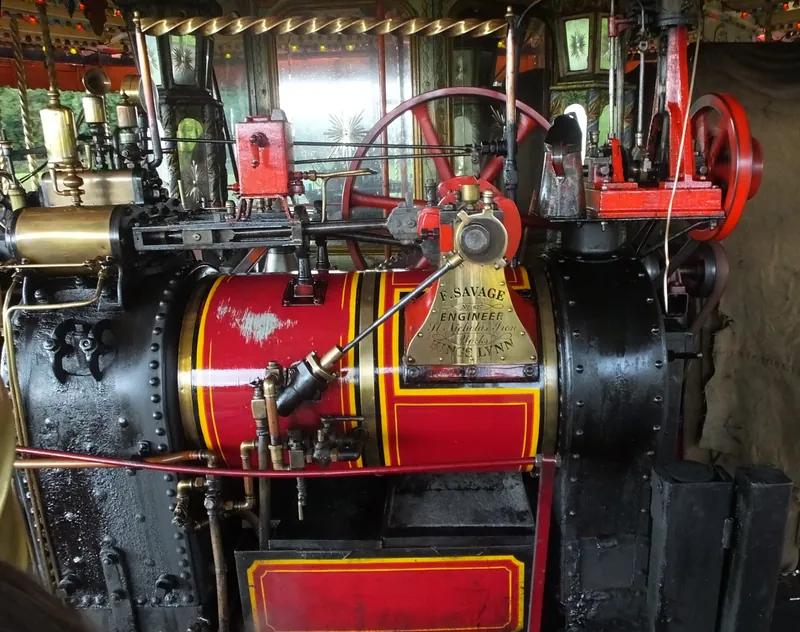
In King’s Lynn, Frederick Savage, who built steam engines for farmers, started repairing showmen’s rides and soon came to dominate fairground manufacturing. Lynn Museum
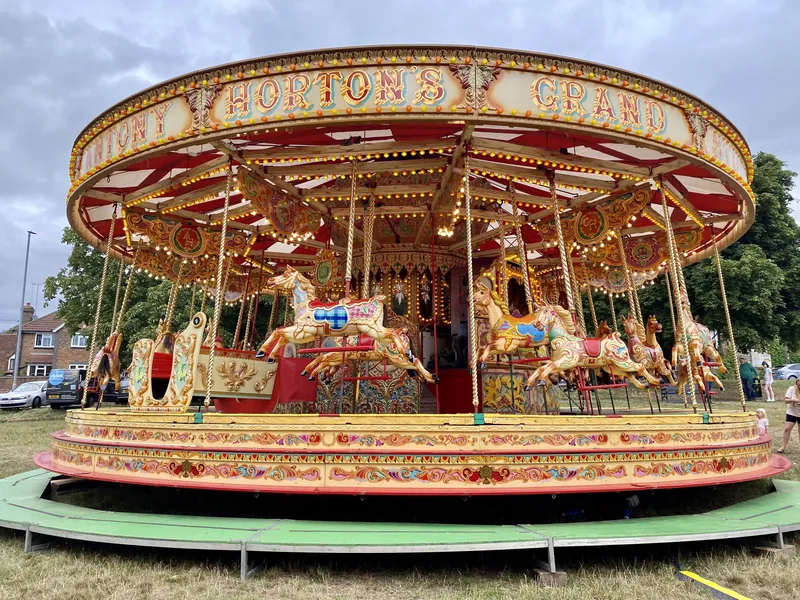
Start somewhere
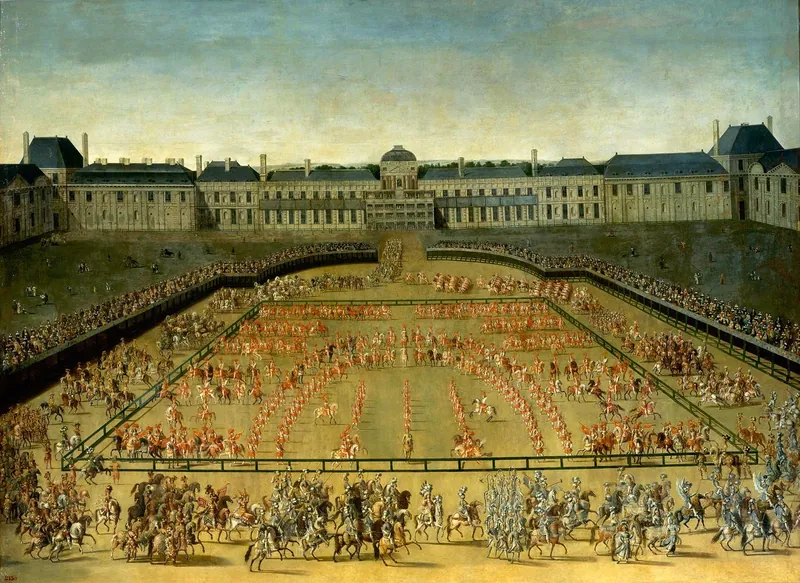 From knights to fairsA training game for horsemen, Louis XIV’s Grand Carrousel of 1662, and the first rides for the public.
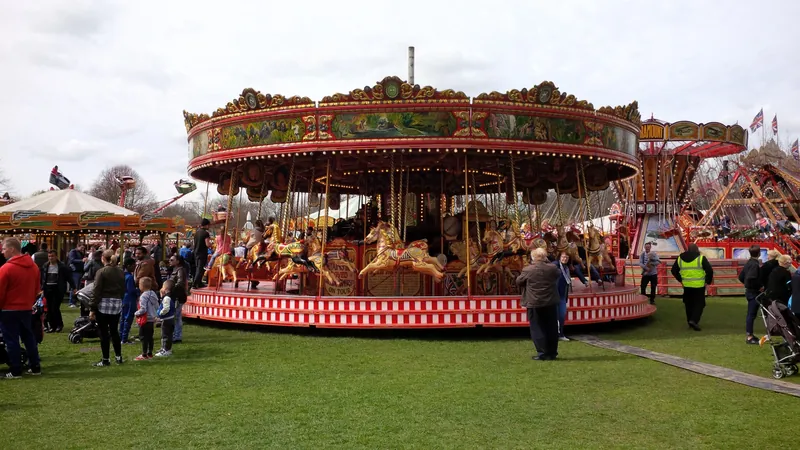 Steam and the gallopersThomas Bradshaw’s steam roundabout, Frederick Savage of King’s Lynn, and why British gallopers turn clockwise.
 How a galloper gallopsThe centre engine, the sweeps and the overhead cranks that lift every horse up and down.
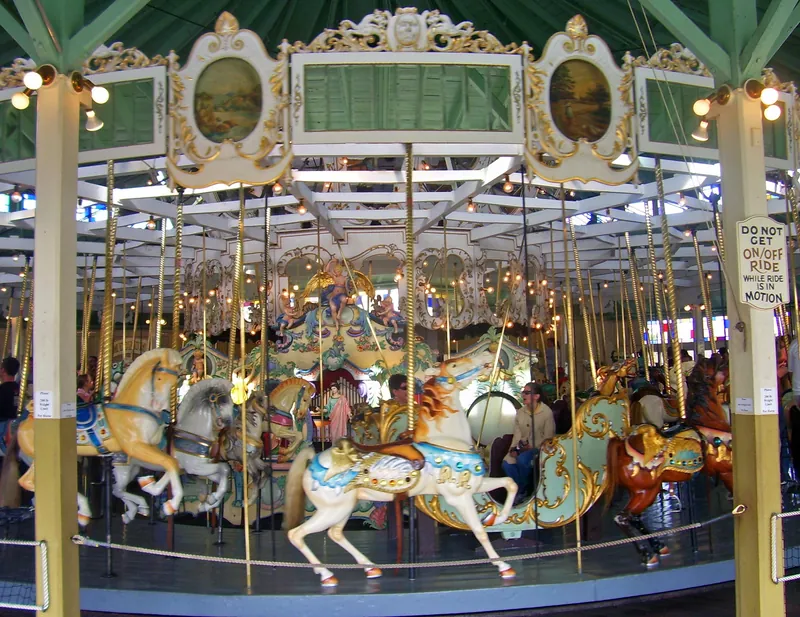 Carousels that still turnThe Flying Horses of 1876, Looff’s Crescent Park masterpiece and Jane’s Carousel in Brooklyn.
Tile photos are credited on their pages and on the credits page.
Why the horses gallop
Savage was involved in the early development of the overhead gears and cranks that let a hanging horse move up and down as the ride turned. Gear Technology
Before gears and cranks, carousel horses went round in a circle but could not rise and fall. Gear Technology
There’s more on amusements.im
The amusements.im hub links every site in the network. Next door: lost amusement parks and Britain’s seaside piers.