From knights to fairs
Long before it was a children’s ride, the carousel was serious training for horsemen.
A little war
The Smithsonian, citing the International Independent Showmen’s Museum, says the word comes from a “little war” game played by Arabian and Turkish horsemen in the 12th century. Smithsonian Magazine Riders threw a clay ball filled with perfume to each other; whoever dropped it smelled of perfume until they could wash. Smithsonian Magazine
The Spanish and Italian words for “little war”, garosello and carosella, eventually became the French “carrousel”. Smithsonian Magazine
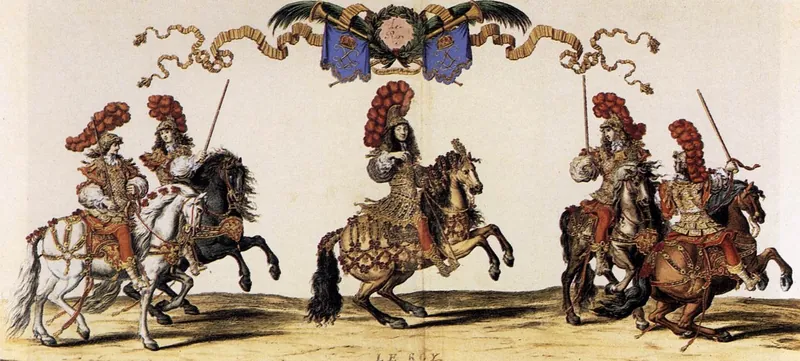
The Grand Carrousel of 1662
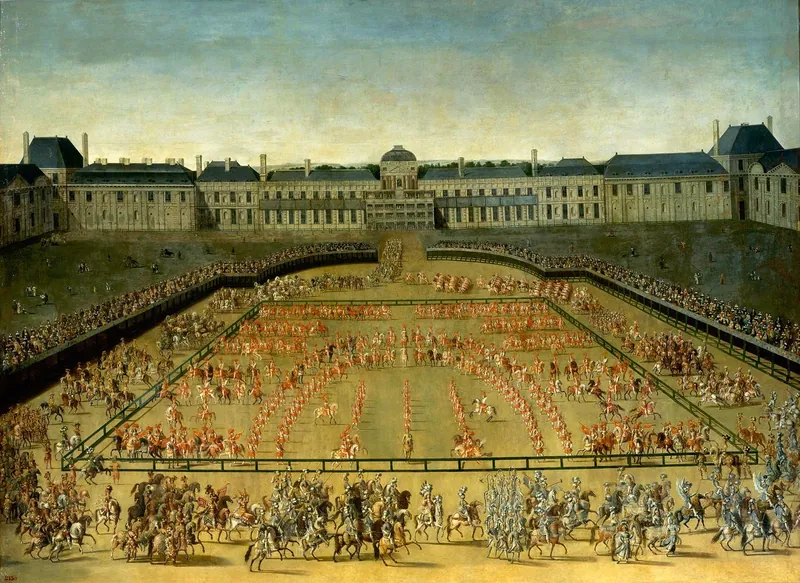
In France the games became a royal show. The greatest was Louis XIV’s Grand Carrousel of 1662, which added other games, food and entertainment. Herschell Carrousel Factory Museum
The practice machine
To train, riders sat on legless wooden horses fixed to beams around a central pole and tried to lance a hanging ring, while a servant or a horse turned the machine. Herschell Carrousel Factory Museum The museum calls this the ancestor of the modern carousel and of “catching the brass ring”. Herschell Carrousel Factory Museum
Flying horses
In the 18th and early 19th centuries these machines became popular with well-off families in Europe, turned by hand or by horse. Herschell Carrousel Factory Museum On some, the horses hung from above and swung outwards as the ride turned, which gave them the name “flying horses”. Smithsonian Magazine